
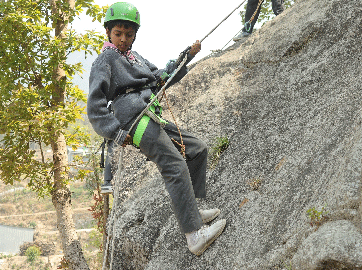
Ultimate Boulder Hill
Experience the rush of bouldering at Ultimate Boulder Hill, our top natural rock climbing and bouldering site. Featuring varied rock formations and difficult boulders, this location has something for every skill level — from beginners learning in an introductory lesson to experienced climbers looking for their next challenge.
Get ready for pulse-racing rock climbing, adrenaline-pumping abseiling, and instructor-guided rescue practice sessions that develop your technique and confidence in a secure, breathtaking outdoor setting. Whether you wish to challenge the rocks for strength or learn the art of descending in control, Ultimate Boulder Hill is your ultimate rock playground
Types of Climbing
Bouldering: Climbing short, powerful routes on big rocks or big boulders without any harnesses or ropes. Crash pads are used for protection. Suitable for beginners and experienced climbers who wish to build technique and strength.
Sport Climbing : Sport climbing on routes pre-equipped with bolts and using ropes and quickdraws for protection. Emphasizes physical movement and problem-solving and can accommodate a broad range of skill levels.
Traditional (Trad) Climbing: Placing temporary protection (i.e., nuts and cams) in natural rock formations while climbing. Requires more technical skill and experience, providing a more traditional type of climbing.
Top-Rope Climbing : The rope is secured at the top of the ascent, and a belayer controls slack from the ground. This is the most secure and most convenient method for beginners and group use.
Aid Climbing: Aiding the upward progress on the rock with the help of technical gear like ladders, slings, and hooks. Aid climbing is usually employed on climbs with minimal or very difficult natural holds and is attempted by experienced climbers looking for a technical challenge.
Multi-Pitch Climbing: Longer than a rope length itineraries, where mountaineers must halt at intermediate belay points (pitches) and ascend in stages. Multi-pitch climbing enables us to visit taller and more intricate rock faces, requiring efficient teamwork and advanced rope management technique.
Types of Rappelling (Abseiling)
Standard Rappel: Most common method: rappelling down a rope fixed at the top of a rock face or cliff using a harness and belay device.
Australian Rappel: Also known as face-first or military rappel, where the participant goes down facing downwards. Provides a secondary adrenaline experience and is typically employed in tactical or adventure applications.
Hanging Rappel: Placing temporary protection (i.e., nuts and cams) in natural rock formations while climbing. Requires more technical skill and experience, providing a more traditional type of climbing.
Tandem Rappel: Two individuals rappel simultaneously on the same rope, normally one above the other. It is commonly utilized in assisting beginners, children, or during rescue missions to provide safety and control.
Fireman’s Belay: A safety back-up wherein a ground-based partner is grasping the rope and can arrest the fall in case.
Rescue Procedures
Self-Rescue Techniques: Encompasses skills such as escaping the belay, climbing a rope using prusik knots, and rigging anchor systems impromptu. A must for every climber to manage emergencies on their own.
Raising and Lowering Systems: With mechanical advantage systems (such as pulleys) to lower or raise an injured climber to safety.
Rescue of Seconding or Leading Climbers: Methods of aiding or rescuing a partner who cannot continue, either while leading or seconding on the ascent.
Improvised Carrying Systems: Developing improvisational methods of moving an injured climber from the cliff side to safety.
Meta Description: Enjoy excellent rock climbing, bouldering, abseiling, and rescue training at Ultimate Boulder Hill — nature's ideal playground for climbers of all experience levels.
Call to Action: Ready to take on the challenge of the rocks? Reserve your Ultimate Boulder Hill experience now and reach new heights!
